How to Create a Legal Blog in Nigeria: Step-by-Step Guide (2025)

FirmLyt Team
October 08, 2025 · 6 min read

Want to know the #1 way Nigerian law firms get new clients in 2025? Legal blogging.
I know what you're thinking: "I'm a lawyer, not a writer!" But here's the truth: lawyers who blog get 67% more leads than those who don't. And it's not as hard as you think.
Why Nigerian Lawyers Need Blogs (The Numbers)
Let's start with cold, hard facts:
- 78% of Nigerian clients research lawyers online before hiring
- Law firms with blogs get 97% more inbound links (better SEO)
- Blogging firms get 13x more ROI than those relying only on introductions
- 60% of clients have contacted a lawyer after reading their blog
Translation: If you're not blogging or showcasing your expertise, your competitors are eating your lunch.
What Makes a Legal Blog Successful?
1. It Answers Real Questions People Are Googling
Bad blog title: "Jurisprudence on Testamentary Disposition" Good blog title: "How to Write a Valid Will in Nigeria (2025 Guide)"
See the difference? One uses fancy legal terms nobody searches for. The other answers what people actually Google.
2. It's Written in Plain English
Remember: Your ideal client doesn't have a law degree.
Legal jargon: "The aforementioned statutory provisions necessitate compliance with..." Plain English: "The law says you need to..."
3. It Provides Actionable Value
Every blog post should give readers something they can DO:
- Checklist they can download
- Template they can use
- Step-by-step guide they can follow
- Warning signs they can watch for
4. It's Published Consistently
One-time bloggers fail. Consistent bloggers win.
Here's the ideal posting schedule:
- Solo practitioner: 2 posts/month minimum
- Small firm (2-5 lawyers): 1 post/week
- Mid-sized firm (6-20 lawyers): 2-3 posts/week
Can't commit? Start with 2/month. That's better than zero!
Step-by-Step: How to Create Your Legal Blog
Step 1: Choose Your Blogging Platform
You have three main options:
Option A: WordPress.org (Self-Hosted)
Pros: Full control, unlimited customization Cons: Technical knowledge required, ₦200,000-₦500,000/year total cost Best for: Large firms with dedicated IT staff
Option B: Generic Blog Platforms (Medium, Blogger, etc.)
Pros: Free or cheap, easy to use Cons: You don't own your content, limited branding, no SEO control Best for: Nobody (seriously, don't use these for professional blogging)
Option C: FirmLyt (Integrated Legal Blogging)
Pros: Built specifically for Nigerian lawyers, integrated with your law firm website, SEO optimization built-in, includes practice management tools Cons: Not free (but extremely affordable) Best for: Solo practitioners to mid-sized firms who want professional results without hassle
Our recommendation: For 95% of Nigerian lawyers, FirmLyt is the best choice.
Step 2: Set Up Your Blog Structure
Create 4-6 main categories matching your practice areas:
For Corporate/Business Lawyers:
- Company Registration & Formation
- Contracts & Agreements
- Intellectual Property
- Employment Law
For Family/General Practice:
- Family Law & Divorce
- Property & Real Estate
- Wills & Estate Planning
- Legal Rights & Protections
Step 3: Research What to Write About
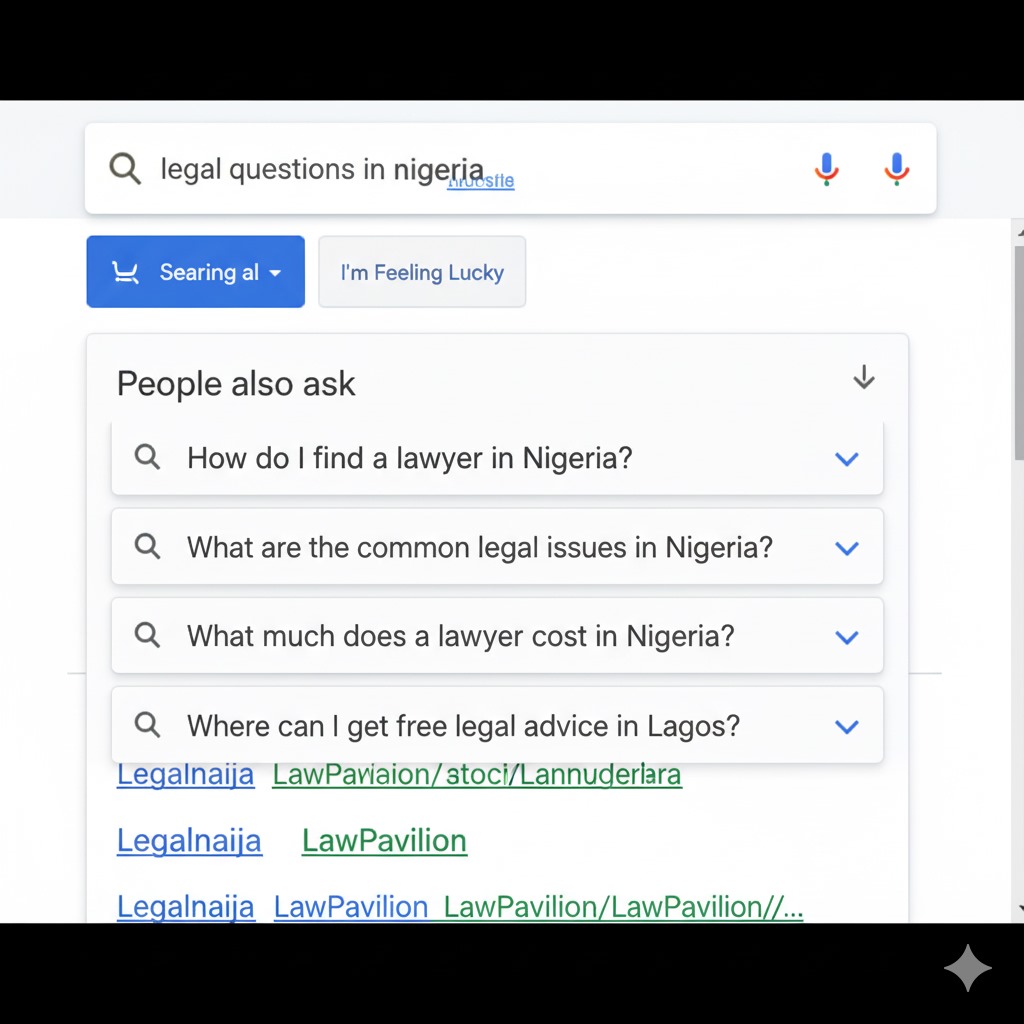
Method 1: Google Autocomplete
Type your practice area + common words in Google:
- "how to register [company/property/trademark] in nigeria"
- "what happens if [divorce/contract breach/trademark infringement]"
Those autocomplete suggestions? That's what people are actively searching for!
Method 2: "People Also Ask" Boxes
Search any legal topic on Google. Look for the "People Also Ask" section. These are goldmine blog topics!
Method 3: Your Client Questions
What do clients always ask you? Keep a "Blog Ideas" note on your phone. Every time a client asks a question, add it to your list.
Your most-asked questions = Your highest-traffic blog posts.
Step 4: Write Your First Blog Post (Template)
Here's a proven structure that works:
TITLE: [Problem/Question] - [Solution/Answer] [Location/Year]
Example: "How to Register a Company in Nigeria - Complete 2025 Guide"

INTRODUCTION (150-200 words):
- Hook: State the problem/question
- Why it matters: Show the stakes
- What they'll learn: Preview the value

MAIN CONTENT (800-1,500 words):
- Use H2 headings for main sections
- Short paragraphs (3-4 lines max)
- Bullet points for lists
- Bold key points

ACTIONABLE SECTION:
- Checklist to download
- Step-by-step instructions
- Template to use

CONCLUSION (100-150 words):
- Summarize key points
- Clear call-to-action
- Offer free consultation
Step 5: Optimize for SEO
Make sure Google (and clients) can find your posts:
Title Tag (60 characters max): Include your main keyword, add location (Nigeria, Lagos, Abuja)
Meta Description (155 characters max): Summarize the post value, include keyword naturally, add call-to-action
Word Count: Minimum: 800 words, Sweet spot: 1,200-1,800 words
FirmLyt automatically handles most SEO - you just write good content!
Step 6: Add Compelling Calls-to-Action (CTAs)
Every blog post should ask readers to do something:
- Free Consultation - "Need help with company registration? Book a free 15-minute consultation →"
- Download Checklist - "Download our free Company Registration Checklist (PDF) →"
- Email Subscription - "Get weekly legal tips in your inbox. Join 500+ Nigerian entrepreneurs →"
Step 7: Promote Your Blog Posts
Writing is 50% of the work. Promotion is the other 50%.
Day 1 (Publication Day):
- Share on LinkedIn (your profile + company page)
- Share on Twitter with relevant hashtags
- Share on Facebook (personal + business page)
- Post in relevant LinkedIn groups
Week 2:
- Create infographic from key points
- Share infographic on Instagram
- Create LinkedIn carousel post
Start Your Legal Blog Today
The lawyers getting clients through blogging started somewhere. Today is your somewhere.
Here's the reality:
- Every day you wait is a day competitors pull ahead
- Every client searching Google right now doesn't find you
- Every question you could answer is being answered by someone else
- Every potential client is hiring a lawyer who has a blog
You don't need to be a perfect writer. You need to start.
Frequently Asked Questions
Q: How long does it take to write a blog post? A: First post: 3-4 hours. After 10 posts: 1-2 hours.
Q: Can I hire someone to write my blog? A: You can, but your authentic voice is what clients want.
Q: What if I'm not a good writer? A: Legal blogging isn't creative writing, it's showcasing subject matter expertise. So write like you talk.
Q: How often should I post? A: Minimum 2x/month. Ideal: Weekly. Start where you can sustain.
Q: What if I share too much information for free? A: Good information attracts clients. They'll hire you for implementation, not information.
FirmLyt: Modern tools, for Modern Law Firms.
Your competitors are already blogging. Don't let them get all the clients.
More from the journal